
What The Genesis Journey Is
The Genesis Journey is a high-touch, deeply personal engagement for founders, consultants, and solopreneurs who are navigating a fundamental misalignment between how they're running their business and how they actually need to live.
It is not traditional business coaching. It is not consulting. It is not therapy. It is, as Claire put it, the thing that transcends all of those — and encompasses all of them — at once.
It is built for the person who doesn't just need better operational systems, but who needs a different relationship with work altogether.
Elysha has spent nearly two decades working at the intersection of people, operations, and complexity — first in executive support and operations roles, where she learned to hold everything together without ever making it obvious she was the one doing it, and then inside Open Tabs, which she's been building since 2019. Over time, something became clear: the biggest challenges leaders faced were rarely just operational. They were human. The mental load, the emotional pressure, the exhaustion of doing too much for too long without adequate support. That recognition is what The Genesis Journey was built from.
Two decades built the skill. Burnout built the understanding.
A Life That Changed Before the Business Did
Claire came to Open Tabs at the recommendation of someone she trusted deeply. Not because she was falling apart — but because she was changing, and her business hadn't caught up yet.
"I started working with Open Tabs because I was navigating new caregiving duties, and life and business felt really overwhelming. I had been spending every waking hour focused on my business, centering my life around my ambition."
Claire HuegThen, almost overnight, that changed. New caregiving responsibilities entered Claire's life, and with them came a complete internal reorientation — from ambition-first to presence-first. The desire to log off quickly, to be available, and to show up differently.
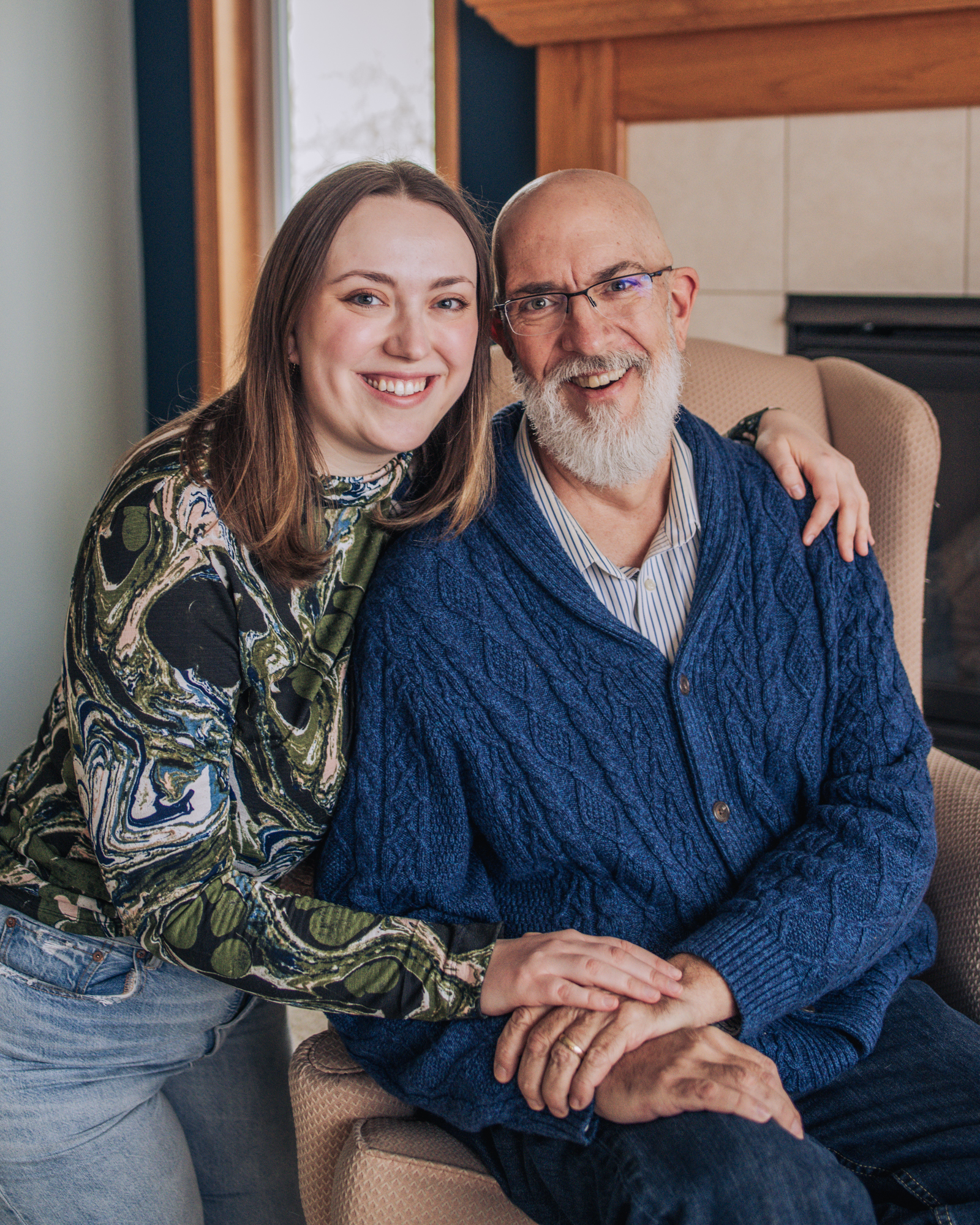
"I switched almost overnight from wanting to prioritize my work to just getting it done and logging off as quickly as I could, so I could be present to those other demands."
The internal shift happened fast. The business couldn't move at the same pace.
"That transition happened internally really quickly, but my business systems weren't able to shift at the same pace."
And so Claire was stuck in a kind of double bind that high-achieving women know intimately: the life had changed, but the infrastructure hadn't. Every task felt urgent. Nothing felt safe to defer. There was no clear sense of where the time was going, or whether what she was doing was actually the right thing to be doing.
"There was always another task on the to-do list, and I couldn't trust that it was okay to save it until tomorrow. Everything felt so immediate. I didn't have a great sense of where my time was going in my workday, or how things were being prioritized."
She wasn't failing. She was in a new season — and she needed support that could meet her there.
What She Was Actually Looking For
Claire had been through coaching before. She knew what it felt like to sit across from someone who was focused on the profit and loss, the growth levers, the structural mechanics of a business.
"My other coaching experiences tend to be very contained — I'd answer really specific questions, turn on my professional analysis mind, and the coach would give me structural feedback that focused on profit and loss, how I could grow the business."
That kind of support has its place. But it wasn't what she needed. What she needed was more intricate and harder to articulate.
"I needed someone who got the systems, the operations, the logistics — and also the energetics and the feelings."
Both. At the same time. Without having to switch modes between them.
That's the thing about the season Claire was in: she didn't have the luxury of compartmentalizing. Her business and her life were pressing against each other, and she needed a container that could hold both without either one getting minimized.
What Made This Different
The shift that happened inside The Genesis Journey wasn't a new framework or a better task management system, though both of those things eventually came. It was a reorientation — a fundamental flip in the question being asked.
"She detached herself from my business outcomes and instead focused on developing my business as an extension of myself. The feedback I was getting from her was not focused on what I needed to do to drive the business forward. Instead, she flipped that and asked what the business needed to do to drive my life forward."
What does the business need to do to drive my life forward?
That's a different question than most business support ever asks. And it changes everything downstream — which decisions get made, which opportunities get pursued, which metrics actually matter.
"When I would reach flexion points in the business, her questions didn't automatically go to profitability. We talked about what mattered in the context of my full self. If I said the bottom line mattered to me because I needed to bring in additional income to fund another goal in my life, then yes, we'd make the move that increased revenue. But if I didn't need that, there were tons of other goals we were willing to make top priority as well."
The business was no longer the point. Her life was the point. The business was the vehicle.
What the Work Actually Looked Like
Part of what makes The Genesis Journey hard to describe from the outside is that it doesn't look like a regular program. It doesn't feel like an average service. It feels, as Claire described, far more integrated.
"She allowed me to start our calls with a rant or a messy problem, and we always ended with tasks and a to-do list, without her ever having to say, 'okay, that's enough chatting, we need to get to our agenda.' The agenda seamlessly transpired as a result of our big, messy conversations."
The practical and the human weren't two separate parts of the conversation. They were the same conversation. What drove that was a particular kind of curiosity — relentless, specific, and deeply patient.
"Elysha reminds me of a toddler who's like, 'mom, why is the sky blue?' 'Well, because—.' 'Well, why?' 'Well—.' 'Well, why?' — continuously asking until you want to throw your hands up and say, 'well, I don't know, I never thought about that.' She lets you throw your hands up and walk away. But on your next call, be ready for her to bring it back up and keep digging. She'll give you a break, but she's not going to let you off the hook."
That kind of persistence only works inside a relationship. And that relationship — the trust required to let someone stay in the uncomfortable questions with you — is what The Genesis Journey is actually built on.
This is not gentle accountability. It's not cheerleading. It's a willingness to go five layers deeper than anyone has ever gone with you and to stay there until what's underneath becomes visible.
"You have to be willing to let her poke around five layers deeper than you've ever let someone poke around, because she'll unearth stuff you never knew about yourself. Elysha really excavated layers of personal dynamics I had with my business that I wasn't even aware of."
One of the most important things she excavated for Claire was the difference between subconscious prioritization and intentional prioritization.
"Elysha really taught me that everything is being prioritized all the time — it's only whether it's your default subconscious prioritization or an intentional act."
That single reframe changed how Claire related to her entire to-do list.
"It stopped being 'I have to run the business because the business needs to be run' — that constant loop of doing, doing, doing for the sake of doing. Instead, we got inquisitive about literally everything."
The questions Claire learned to ask were:
"Why am I doing this? Is this valuable to me? Is this valuable to the client? If so, what type of value does it hold? Financial value? Intrinsic value? Creative expression? Is there something else driving this that makes its existence more valuable than the time I'm investing in it? And if not — it's not worth the trade-off."
What Changed — Internally
Some of what changed can't be measured in a spreadsheet, and that's intentional. The Genesis Journey isn't optimizing for a single business outcome. It's building something more durable than that.
"The confidence and clarity Elysha instilled into every part of our partnership has been tattooed onto my systems, tattooed onto my way of viewing the business. It has stayed present and stayed active even once she was no longer involved in the day-to-day."
By the time their engagement wound down, Claire had made a decision she'd been afraid to make: stepping back into a solopreneur role after operating as a micro agency. The kind of structural shift that requires a particular kind of clarity, decisiveness, and courage.
"I was really afraid to walk away from working with Elysha, because of how valuable our conversations were. But she has become a Jiminy Cricket for my business. Her way of seeing the work is still very present in my business, even without her continued involvement."
The Genesis Journey is not a subscription to someone else's clarity. It's the process of building your own — permanently.
The Jiminy Cricket is Claire's now. The framework, the questions, the way of seeing — those belong to her. She didn't have to keep paying for it to keep working.
Investing in something that compounds inside you rather than expiring when the invoice stops — that's a different calculation than a tool, a course, or a retainer that runs on someone else's continued involvement. The work Claire did here is still running. That's the return.

What Changed — Externally
And then there were the concrete, practical, measurable things.
"My inbox is cleaner. My business is bringing in more money. My systems feel easier."
Scope creep — the silent profit killer for service providers — decreased significantly for Claire.
"I recognized a lot of my patterns were really me jumping way too quickly on unimportant projects and procrastinating on impactful ones. I now have guardrails within my systems for prioritization to avoid that. I've also gotten much better at giving feedback to clients and collaborators, which has saved me a lot of scope creep and stress, improved work-life balance, and allowed me to be more profitable because I'm working less unbillable hours."
Less unbillable hours. More revenue. Cleaner systems. Better client relationships. A business that fits the life Claire is actually living, not the one she used to live. These didn't come from a new software tool or a course. They came from understanding the patterns underneath the behavior, and building something that actually addressed them.
What This Partnership Made Possible
The most lasting thing — the thing Claire came back to at the end of every question — was this:
"This partnership set me up for success because it wasn't focused on building one business system for me to operate forever. It was focused on building my relationship to work in a way that I will carry through every iteration of my business and any role I take on."
A relationship to work. Not a better workflow. Not a more efficient process. A relationship — the kind that holds through every season change, every new demand, every version of yourself you'll grow into.
"In a lot of ways, the work I did with Elysha transcended business coaching, life coaching, therapy, coffee with a friend, calling your mom in tears — all of the things you need to do for outlet and perspective. Elysha effortlessly blends all of those into one experience, and that's exactly what you need when you're trying to dig through really big existential questions as a founder, consultant, or solopreneur."
Who This Is For
The Genesis Journey is for the woman who is willing to get genuinely curious — not just about her business, but about herself. You might be the right fit if:
- Your life has changed, but your business hasn't.
- You're "managing" — but you can feel the misalignment beneath the surface.
- You've done the business coaching thing, and something about it always felt incomplete.
- You know you're capable of more, but you're not sure more of what.
- You're tired of generic advice that doesn't account for who you actually are.
- You're ready to build something that can support a different version of you.

"You have to get curious about the whys. And not just what you'd tell someone is your why at a networking event — but actually what drew you to desire operating a business in the first place. Why you've chosen to have a career in the line of work you have. The purpose of your business existing."
"You have to answer those root causes and motivations so you can solve your problem in a way that is unique to you. There's tons of advice on Reddit or TikTok. You can ask ChatGPT what you should do and it'll give you generic advice. But everything really needs to ground back to purpose and intention, and it's sometimes hard to see that picture without having a trusted sounding board who can hold a mirror up for you to look at yourself in a new way."
"Anything you build off of generic, blanket advice works for a while. But Elysha really strives to build something lasting that's integrated into your sense of self. She helps you get honest about the unique strengths and needs you bring to the table, and makes sure all of those are used and met."
Who This Is Not For
This matters, too — because The Genesis Journey is not a light lift.
"It's not for you if you're a delegate-and-go person. Elysha is going to push you, ask you to reflect deeply, and sometimes piss you off with questions about things you'd like to stay in denial about for a little bit longer."
If you're looking for someone to hand a to-do list to and walk away from — this isn't it. If you're looking for accountability without introspection — this isn't it.
"But if you're someone who is willing to put your ego on the shelf for the sake of growth and to resolve a fundamental misalignment in your life or business, Elysha is absolutely the person for you."
The Next Step
There's one more thing worth naming directly: spending anything right now requires trust. The economy is uncertain, and every dollar that leaves your account in this season carries more weight than it did a few years ago. The Genesis Journey isn't the right investment for every founder at every moment, and Elysha will tell you that herself on the discovery call if it's true.
But if the misalignment you've been feeling is costing you — in unbillable hours, in decisions made from exhaustion, in the invisible tax of running a business that doesn't fit your life anymore — the cost of staying in it is already real. It's just harder to see on a spreadsheet.
If you read this and recognized something — the overwhelm, the season shift, the sense that the way you're working doesn't fit who you're becoming — that's not a coincidence. That's the conversation The Genesis Journey is built for.